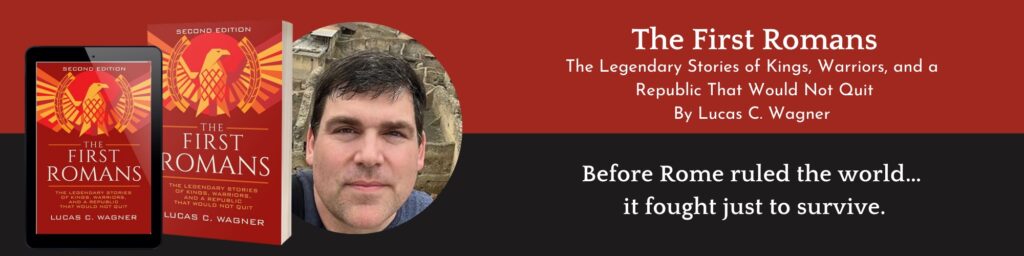
Lucas C. Wagner studied classical languages at schools in the United States and Italy, including Harvard University. He holds an MBA from the Thunderbird School of Global Management and graduated magna cum laude with a BA in Philosophy from Texas A&M University.
Author Q&A
What is the name of your latest book and what inspired it?
My latest book is called The First Romans: The Legendary Stories of Kings, Warriors, and a Republic That Would Not Quit. Over the past few years, I did a large translation of The History of Rome by Roman historian Livy. My father was excited to read it, but it’s so long that he asked me if my next book could be a “greatest hits” with my favorite stories. It sounds like an easy task since it’s my own source material, but there were many challenges involved.
Really? What were some of the challenges in bringing it to life?
Well, for example, Livy writes chronologically. Some of his stories never resolve, just like real life. He didn’t have all the answers, as Rome’s archives were destroyed by the Gauls hundreds of years before he was even born. However, other ancient writers had things to say about them, and they fit neatly into the narrative. The First Romans is not a Livy work, but his DNA is there.
How much of the book is realistic?
Legends are less important for what they literally mean and more important for their impact. I added a story about what happened to a thief when he tried to steal Hercules’ cattle as he drove them through the lands that eventually would become Rome. It’s a myth, but the legend was important to the Romans, themselves. Its importance was real, even if the story was not.
What genre do you consider your book?
History, but with a twist: there are lessons about leadership and morality. When people are taught history, lessons tend to be watered down in the interests of academic impartiality. In the world of artificial intelligence, anyone with a computer can write a very dry, academic history book and sell it. What’s not being sold is how to use history. In The First Romans, you will have at least one or two solid takeaways from history.
Is there a message in that you want readers to grasp?
History doesn’t repeat, but it echoes. Every generation wants to believe its issues are unique. The truth is that today’s people wrestle with problems that are ancient. Who gets to be rich? Who gets to have the power? Sometimes, our ancestors resolved these questions in ways that we don’t agree with today. However, we have the power to make our own decisions, and we shouldn’t be limited by our ancestors. That said, the repercussions of trying to make change happen will be just like as they were in history, too. People don’t want things changed.
What authors or books influenced you while writing it?
While I mentioned Livy earlier as the backbone of the book’s content, it was Niccolò Machiavelli who influenced the way I edited it. Machiavelli’s Discourses on Livy is a great example of how someone takes history and uses it to understand human nature. The stories I picked, as such, had to do with universal, human experiences and how people can affect major change with skill, resilience, and courage.
How can readers discover more about you and your work?
Just type my name: lucascwagner.com and join my mailing list.
The First Romans: The Legendary Stories of Kings, Warriors, and a Republic That Would Not Quit is available for purchase on Amazon.
https://www.amazon.com/First-Romans-Legendary-Warriors-Republic-ebook/dp/B0G88827FN